Trending
This story is from June 16, 2013
Death over shelter
Redevelopment is complex: it’s hard to evict people from unsafe buildings when they choose to risk death rather than move out of their homes.
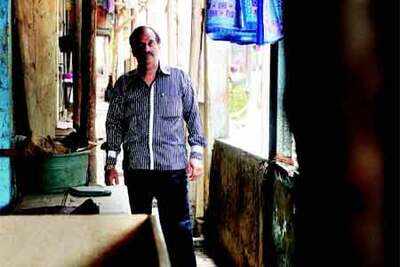
Thirteen-year-old Zainab has just moved into a transit camp in Mazgaon to stay with her uncle Mohammed Tole, grandmother, cousins, aunts and uncles. She keeps up a constant chatter as she helps her mother Shaheen serve endless cups of tea to relatives.

Zainab’s family has only just moved in to the New Hind Mills Compound. Till mid-May, they lived in Botawala Chawl, a cluster of six two-storey buildings that stand on roughly an acre of land, that has been declared dangerous and unfit for living for the past five years by the Maharashtra Housing and Development Authority (MHADA). wants to know how the BMC tags buildings as ‘unsafe’.
Faulty auditing
Prashant Lotankar, a 35-year-old engineer was in for a shock when he returned home on Wednesday. BMC officials had pasted a notice on his door declaring his building unsafe and asking residents to vacate in 48 hours. “The building is perfectly fine,” Lotankar insists.
The BMC-owned 88 Tenements in Wadala houses 88 families, many of whom are municipal employees. The civic body’s structural audit is flawed and shoddily done, says Lotankar. “The A wing houses a dispensary on the ground floor, while the other two wings have jewellery shops, but the audit report shows dispensaries in all the three wings. It also states that there is one metre of fungal growth on all three buildings. How can fungus grow so uniformly?”
The residents are also protesting being moved to Mahul, located in Trombay. Like Zainab, Lotankar’s son will lose out on an academic year. “We don’t mind redevelopment, but transit accommodation must be in the city, not Mahul,” says a resident.
Deshpande met Mohan Adtani, Additional Municipal Commissioner, last Thursday. “It looks like the report has been duplicated to reflect the same thing for all three wings. It shows how casually the BMC takes the survey,” he says.
Developer nexus
“There are several buildings that are structurally fit, but are marked as unsafe by the BMC or the MHADA under pressure from developers. The mechanism used for surveying the buildings by the civic body is not foolproof and needs to be changed. There are many cases where buildings are fit for habitation and may need repairs, but they are marked dangerous,” says Makrand Narvekar, chairman of the BMC’s Law Committee.
A senior BMC official however maintains, “Our mechanism has many checks and it is not so easy to mark a building as unsafe.”
Deshpande feels otherwise. He alleges that engineers don’t visit all sites. “The survey has no meaning.”
He has a point. If Altaf Manzil had been surveyed, then why didn’t the structural changes made on the ground floor that housed a car showroom come to light? The building, home to Sanjay Dutt’s lawyer Rizwan Merchant, was not on the BMC list. Neither was Borivali’s Raj Vaibhav building that developed cracks and tilted last week (Mumbai Mirror, June 13, Residents wake up to find their building tilted). All the 60 flats in the building were evacuated and the BMC issued a pull down notice.
MHADA officials too, face resistance from residents, who fear that once they start living in transit camps, they will become permanent refugees. Their concern isn’t unfounded. A photojournalist who didn’t wish to be named has lived in a transit camp in Borivali for over 38 years, after his family was relocated following the collapse of their building in Chor Bazaar, Grant Road. Now, he says, MHADA is keen to redevelop their own plot and has asked residents to move to another transit camp in Kandivali. “The building has not been maintained well. Portions of the ceiling inside the homes and on verandahs have fallen off. Although we pay the MHADA rent for upkeep, nothing has been done,” he says.
“Many times, a section of tenants stall redevelopment, and damage the prospects of the building. We don’t want people to live in old and dangerous structures. We may introduce a system where redevelopment will be approved with consent of less than 70 per cent of the tenants,” Ahir said.
Reaching a consensus
The story of ‘petty’ residents who have it in for redevelopment and spoil the party for everyone is a well-known one. Residents are often at loggerheads with owners, other tenants and builders. Yet, the truth isn’t quite the morality tale of good versus bad guys that it’s made out to be. In such a situation, says Durgesh Kothari, director of a Borivali-based consultancy firm Edifice Erections Pvt limited, it is imperative to reach an agreement that suits everyone’s interest. Kothari lost three members of his family when his earlier residence, Laxmi Chhaya in Borivali, collapsed in 2007, killing 30 people. His firm has worked with over 45 building society groups on redevelopment projects, helping them negotiate terms with builders and ensuring residents know their rights. He says it is important for societies to appoint structural engineers to examine the state of their building. While appointing a developer, residents should negotiate a profit-sharing agreement that accounts for both additional area in the redeveloped flat, and a corpus fund to take care of their rent while their building is undergoing redevelopment. “Residents should also know what the developer intends to do with the saleable area of the plot, and whether their deal is concomitant with what he will put up for sale,” says Kothari.
The main question remains: Is the survey being done correctly? In the aftermath of the Mumbra building collapse on April 4, which killed more than 70 people, the Comptroller and Auditor General had also questioned the mechanism adopted by agencies, especially MHADA for identifying old and dilapidated cessed buildings. “It is difficult to measure the efficacy of survey methodology adopted by the board. The fact that 37 people died and 39 persons were injured between 2008 and 2011 due to collapse of seven cessed buildings, even after a survey by the MRRB, is a pointer to the inadequacies in the existing survey system,” the CAG report which was tabled in the Maharashtra assembly the same month, reads. The report also took exception to the visual inspection method. “It is difficult to ascertain visually, the deterioration or distress of building structure,” it read.
Narvekar offers some solutions: “The BMC should appoint a private consultant to undertake the survey. This issue is about human lives, so simply a visual audit is not enough. A scientific audit must be carried out after informing residents in advance. Redevelopment proposals should also be made public.”
How does the BMC deem a building unsafe?
The BMC’s survey is carried out by junior engineers of the corporation’s 24 administrative wards. For private buildings, a sub engineer and assistant engineer (AE) of the Building and Factory department are also involved. The junior engineer does a visual inspection and prepares a report to submit to an AE. If the building seems dangerous, an AE may visit it before submitting his report with suggestions to demolish or repair the building to an executive engineer (EE) who calls for a structural audit report. The list of unsafe buildings is sent to the deputy chief engineer of the Building Proposal department. A final list is compiled and published. For BMC-owned buildings, the procedure is the same, but the survey is conducted and report prepared by an AE of the Maintenance department. According to renowned structural engineer Shantilal Jain, one needs to look out for visible states of disrepair, such as broken or cracked columns, corroded steel, and rotted wood.
End of Article
FOLLOW US ON SOCIAL MEDIA









Photostories
Featured In Lifestyle

Popular Categories
Entertainment NewsBollywood NewsTollywood NewsKollywood NewsMollywood NewsMovie ReviewsLatest Hindi MoviesLatest Tamil MoviesMX PlayerParenting TipsHome RemediesWeight LossBeauty TipsParenting TipsHindi VideosHindi Video SongsBhojpuri Music VideosLatest Telugu MoviesBhojpuri Music VideoHindi TV News
Trending in Entertainment
Latest MoviesBollywood MoviesHollywood MoviesTamil Movies 2024Telugu Movies 2024Malayalam Movies 2024Kannada Movies 2024Marathi Movies 2024Bengali Movies 2024Top Rated Movies 2024Best Hindi MoviesBest English MoviesBest Telugu MoviesBest Tamil MoviesBest Malayalam MoviesBest Kannada MoviesBest Bengali MoviesUpcoming Hindi MoviesBest Movies Of All TimeBest Hindi Movies of All Time
Trending in Etimes
Horoscope TodayNumerology Predictions TodayWalz Vs VanceJD VanceKamala HarrisPopulated Indian CitiesAlcohol Cancer RiskNational Boyfriend Day 2024Sunita WilliamsDepression RiskNepal FloodBarbra StreisandSnoring Prevention TipsDonald TrumpMagnesium DeficiencyRelationship TipsLake Michigan DiscoveryRelationship TipsEkadashi in October 2024
Trending in TV
Trending in Lifestyle
Trending in Regional
Movie Reviews
Binny And Family ReviewLove, Sitara ReviewWill & Harper ReviewWolfs ReviewYudhra ReviewJo Tera Hai Woh Mera Hai ReviewKahan Shuru Kahan Khatam ReviewHis Three Daughters ReviewNever Let Go ReviewDancing Village: The Curse Begins ReviewTransformers One ReviewFirst Love ReviewBerlin ReviewThe Buckingham Murders Review
Upcoming Hindi Movies
Upcoming Regional Movies
Latest News
49ers' Christian McCaffrey May Return in Week 7 Against Chiefs, Adam Schefter Shares Latest Injury UpdateBigg Boss Tamil 8: Sunitha Gogoi to dazzle with dance performance from Vijay’s film 'GOAT'Zodiac Sign Women Who Cherish Independence"Will form govt in both Haryana, J-K": BJP's Tarun Chugh on upcoming Assembly elections resultsCongress' Jairam Ramesh highlights 'three dark clouds' threatening Indian economy's growthRevealed: The real reason Taylor Swift was missing from Travis Kelce's birthday celebrationFans shower praises for Indira Krishna's role Paani Bai in Durga writes, "She's Lady Nana Patekar, Yeh toh Komolika ka bhi record todegi"Will Varun Dhawan, Shraddha Kapoor, and Kriti Sanon come together in 'Stree' x 'Bhediya' film?Bigg Boss Tamil 8: Actress Sachana Namidass to participate in the upcoming season?Identifying PCOS and when to seek help from professionalsYamuna river pollution hits record high in Delhi: Faecal coliform levels soar in SeptemberMayank Yadav set to become a capped player ahead of IPL auction'No need to think about India's foreign policy': BJP' Kavinder Gupta on Mirwaiz Farooq statementBigg Boss 18 Promo: Salman Khan reveals the theme of the season by predicting the contestants' future in the houseBigg Boss Tamil 8: Ex-contestant Pradeep Anthony to participate in the upcoming season?State reminds pvt med colleges to follow SC mandate, resume admissions; colleges wait for assurance on fee reimbursementsWomen's T20 World Cup: Where India stand in race of semifinals after nervy win against PakistanBigg Boss Tamil 8 logo unveiled: Vijay Sethupathi set to host the new season
Other Group Sites -
ETimes is an Entertainment, TV & Lifestyle industrys promotional website and carries advertorials and native advertising.